
Speech therapist business cards and design ideas
Speech therapist marketing should make speech, language, and communication assessment and support easy to understand, credible, and simple to act on for local clients seeking sustainable wellbeing and self-care support. This guide combines practical campaign planning with editable prompt recipes and visual examples, so you can move from an idea to a usable business card without starting from a blank canvas.
Marketing analysis
What the design needs to achieve
Help local clients seeking sustainable wellbeing and self-care support understand speech, language, and communication assessment and support, trust the business, and take one clear next step. For speech therapist businesses, the strongest campaigns focus on generate enquiries for speech, language, and communication assessment and support, promote initial consultation, build recognisable local trust. The design should help local clients seeking sustainable wellbeing and self-care support, new local customers comparing speech, language, and communication assessment and support, past customers ready to return or refer understand the offer, recognise why the business is credible, and take the next step without searching for essential details.
- ✓real service details, authentic local proof, clear availability, and accurate contact information
- ✓real contact and service-area details
- ✓truthful proof that matches the business
Why business cards
Use the format intentionally
Business card design is particularly useful here because it supports personal introductions, referral prompts, appointment reminders, contact sharing. Prioritise one campaign goal, one visual hierarchy, and one response action. Recommended starting formats include 3.5 × 2 in, 85 × 55 mm, Horizontal, Vertical.
Prompt → design examples
Campaign directions you can adapt
Each example connects a clear marketing goal to a structured prompt. Replace the sample offer and details with information that is true for your business.
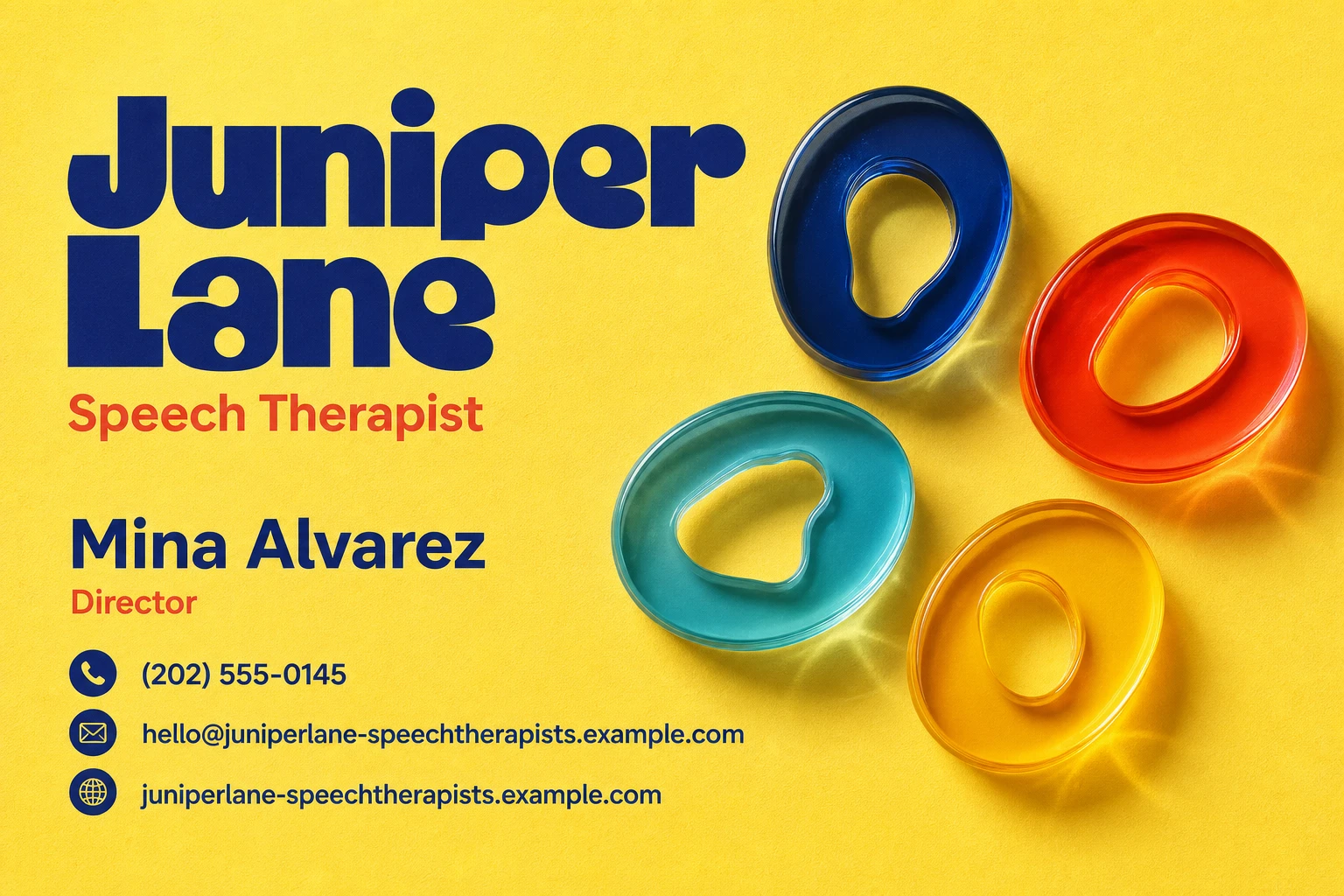
Phoneme Orbit — First Consultation Enquiry Card
An immediate-response card built around the reassuring idea that speech can be explored one sound at a time. Oversized abstract vowel forms and layered acoustic rings make the specialist subject legible at a glance without relying on clinical clichés, people, or diagnostic claims.
Prompt
Create a simple business card for a local speech therapist, featuring initial consultation. Use yellow and navy blue in a clear, easy-to-edit layout that makes the finished result the main visual. Add a name, role, phone number, email, and website, and keep it a contact card rather than an ad.
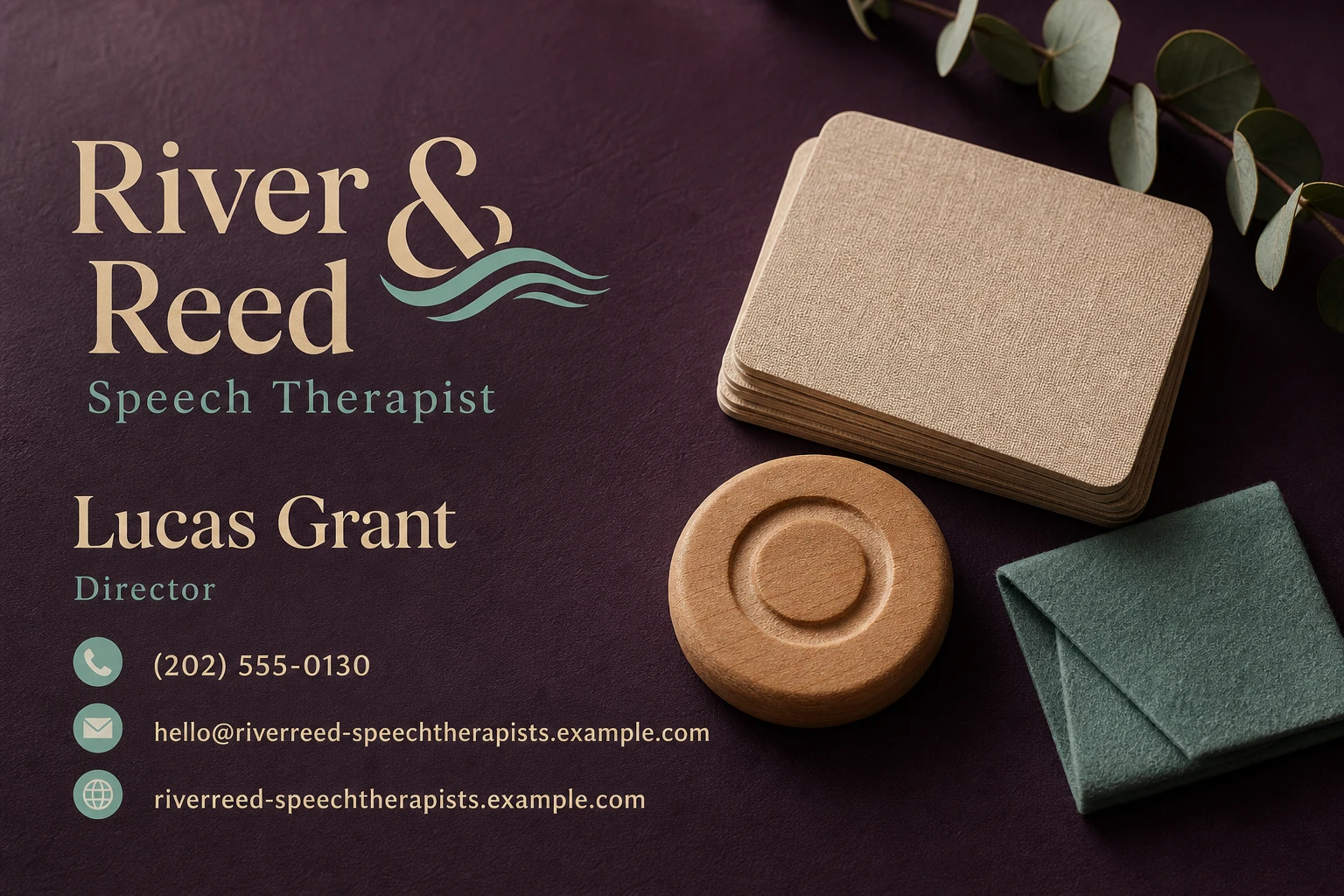
Listening Table — Neighbourhood Speech Support Trust Card
A quieter trust-building card that frames speech therapy as a patient, well-prepared practice of listening, language, and meaningful exchange. Material detail and measured spacing offer credibility to returning clients and referrers without using a provider portrait or making outcome claims.
Prompt
Create a simple business card for a local speech therapist, featuring seasonal speech, language, and communication assessment and support reminder. Use charcoal and beige in a clear, easy-to-edit layout that makes the finished result the main visual. Add a name, role, phone number, email, and website, and keep it a contact card rather than an ad.
Interactive prompt builder
Build your own starting brief
Change the campaign details, copy the result, or send it directly to AI Marketing Designer.
Generated brief
Create a polished business card for a local speech therapist. Campaign goal: generate enquiries for speech, language, and communication assessment and support. Audience: local clients seeking sustainable wellbeing and self-care support. Offer: initial consultation. Visual direction: natural materials, calm service-result details, sensory texture, and spacious reassuring typography; rooted specifically in speech, language, and communication assessment and support. Include a strong headline, real service details, authentic local proof, clear availability, and accurate contact information and real contact and service-area details, and one clear call to action. Format: 3.5 × 2 in. Keep all text readable and leave room for real business details.
Copy ideas
Headlines and calls to action
A better way to enquiries for speech, language, and communication assessment and support
Initial consultation — made simple
Local speech therapist, clear next step
Seasonal speech, language, and communication assessment and support reminder for new local customers comparing speech, language, and communication assessment and support
Quality checklist
Mistakes to avoid
- !Using generic imagery or vague claims instead of showing real service details, authentic local proof, clear availability, and accurate contact information and one focused offer.
- !Trying to speak to every possible audience instead of prioritising local clients seeking sustainable wellbeing and self-care support.
- !Using decorative elements that compete with real service details, authentic local proof, clear availability, and accurate contact information and the main call to action.
- !Publishing placeholder contact information or an offer without clear terms.
Avoid diagnosis, cure, guaranteed outcome, or unsupported health claims; match all wording to real qualifications.