
Private tutor business cards and design ideas
Private tutor marketing should make personalised academic tutoring easy to understand, credible, and simple to act on for students and families seeking focused learning support. This guide combines practical campaign planning with editable prompt recipes and visual examples, so you can move from an idea to a usable business card without starting from a blank canvas.
Marketing analysis
What the design needs to achieve
Help students and families seeking focused learning support understand personalised academic tutoring, trust the business, and take one clear next step. For tutoring businesses, the strongest campaigns focus on generate enquiries for personalised academic tutoring, promote learning needs consultation, build recognisable local trust. The design should help students and families seeking focused learning support, new local customers comparing personalised academic tutoring, past customers ready to return or refer understand the offer, recognise why the business is credible, and take the next step without searching for essential details.
- ✓subject expertise and clear lesson format
- ✓real contact and service-area details
- ✓truthful proof that matches the business
Why business cards
Use the format intentionally
Business card design is particularly useful here because it supports personal introductions, referral prompts, appointment reminders, contact sharing. Prioritise one campaign goal, one visual hierarchy, and one response action. Recommended starting formats include 3.5 × 2 in, 85 × 55 mm, Horizontal, Vertical.
Prompt → design examples
Campaign directions you can adapt
Each example connects a clear marketing goal to a structured prompt. Replace the sample offer and details with information that is true for your business.
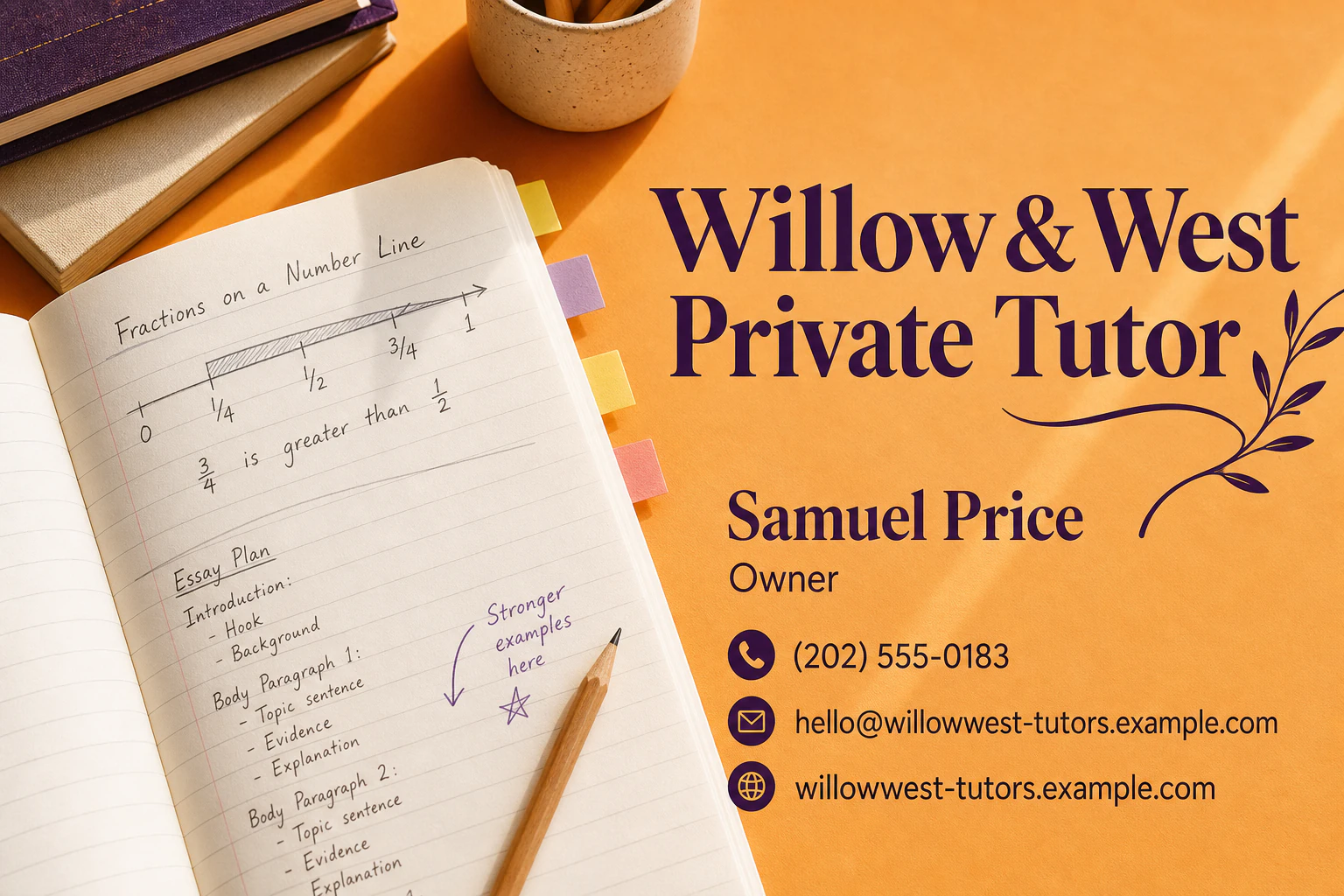
The Margin Note Consultation
Offer-and-response-led: this direction turns the familiar moment of a study plan becoming clear into an immediate invitation to request a learning-needs consultation. It gives families a tangible, non-promissory signal of personalised support without showing a tutor or student.
Prompt
Create a simple business card for a local private tutor, featuring learning needs consultation. Use yellow and charcoal in a clear, easy-to-edit layout that makes the finished result the main visual. Add a name, role, phone number, email, and website, and keep it a contact card rather than an ad.
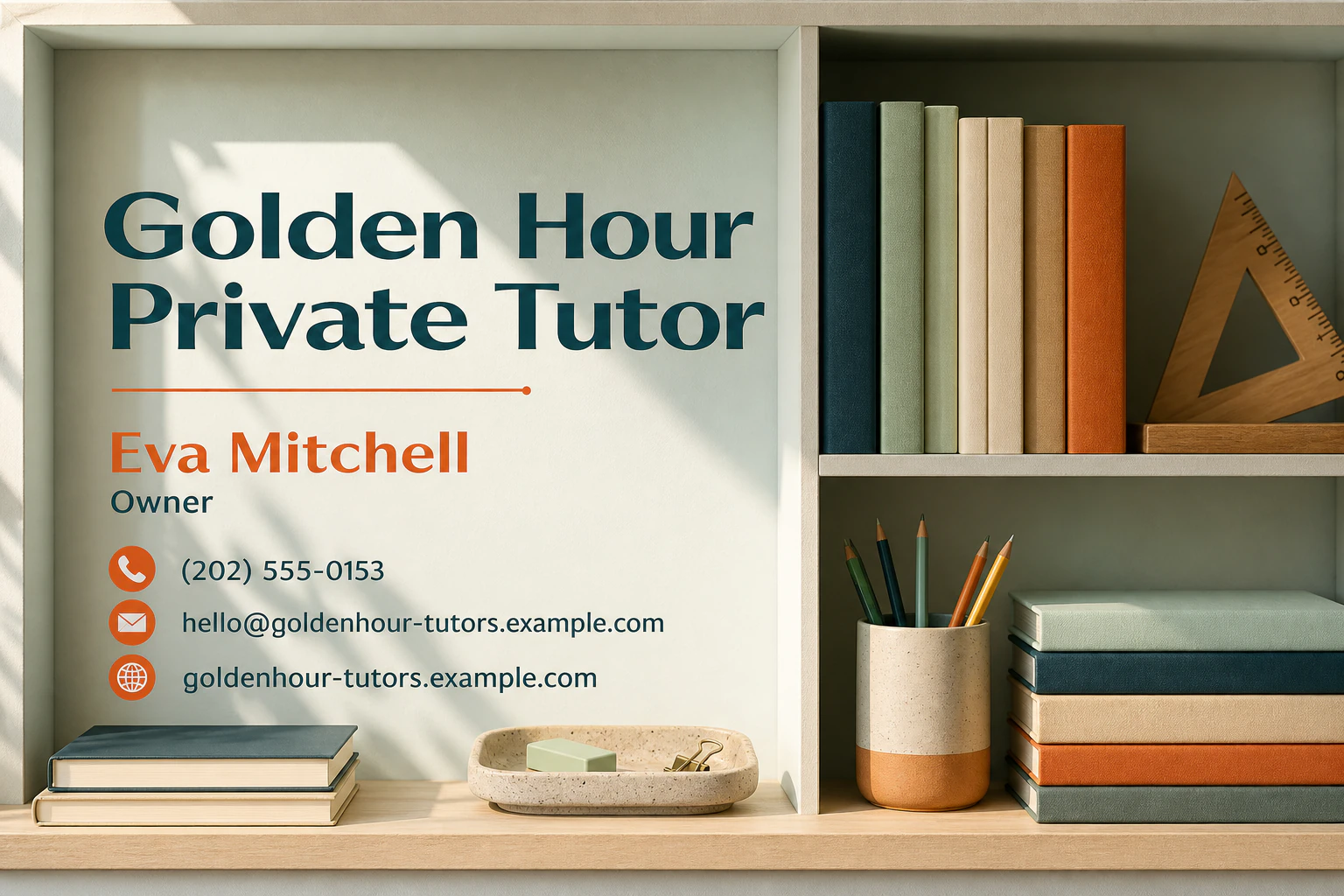
The Quiet Shelf of Progress
Brand-and-trust-led: this direction positions the tutor as a calm, well-prepared local learning partner through a carefully ordered environment of enduring study resources. It builds recognisability and credibility for returners and referrals without relying on people, claims, or institutional clichés.
Prompt
Create a simple business card for a local private tutor, featuring seasonal personalised academic tutoring reminder. Use light gray and navy blue in a clear, easy-to-edit layout that makes the finished result the main visual. Add a name, role, phone number, email, and website, and keep it a contact card rather than an ad.
Interactive prompt builder
Build your own starting brief
Change the campaign details, copy the result, or send it directly to AI Marketing Designer.
Generated brief
Create a polished business card for a local private tutor. Campaign goal: generate enquiries for personalised academic tutoring. Audience: students and families seeking focused learning support. Offer: learning needs consultation. Visual direction: focused learning moment, friendly blue, and clean educational graphics. Include a strong headline, subject expertise and clear lesson format and real contact and service-area details, and one clear call to action. Format: 3.5 × 2 in. Keep all text readable and leave room for real business details.
Copy ideas
Headlines and calls to action
A better way to enquiries for personalised academic tutoring
Learning needs consultation — made simple
Local private tutor, clear next step
Seasonal personalised academic tutoring reminder for new local customers comparing personalised academic tutoring
Quality checklist
Mistakes to avoid
- !Using generic imagery or vague claims instead of showing subject expertise and clear lesson format and one focused offer.
- !Trying to speak to every possible audience instead of prioritising students and families seeking focused learning support.
- !Using decorative elements that compete with subject expertise and clear lesson format and the main call to action.
- !Publishing placeholder contact information or an offer without clear terms.
Avoid guaranteed grades, admissions, or examination outcomes.