
Clothing boutique posters and design ideas
Clothing boutique marketing should make curated fashion and personal service easy to understand, credible, and simple to act on for style-conscious local shoppers. This guide combines practical campaign planning with editable prompt recipes and visual examples, so you can move from an idea to a usable poster without starting from a blank canvas.
Marketing analysis
What the design needs to achieve
Help style-conscious local shoppers understand curated fashion and personal service, trust the business, and take one clear next step. For clothing boutiques, the strongest campaigns focus on generate enquiries for curated fashion and personal service, promote new collection preview, build recognisable local trust. The design should help style-conscious local shoppers, new local customers comparing curated fashion and personal service, past customers ready to return or refer understand the offer, recognise why the business is credible, and take the next step without searching for essential details.
- ✓real product photography and store information
- ✓real contact and service-area details
- ✓truthful proof that matches the business
Why posters
Use the format intentionally
Poster design is particularly useful here because it supports events, opening offers, window displays, classes and announcements. Prioritise one campaign goal, one visual hierarchy, and one response action. Recommended starting formats include A3 portrait, A2 portrait, 18 × 24 in, Digital display.
Prompt → design examples
Campaign directions you can adapt
Each example connects a clear marketing goal to a structured prompt. Replace the sample offer and details with information that is true for your business.
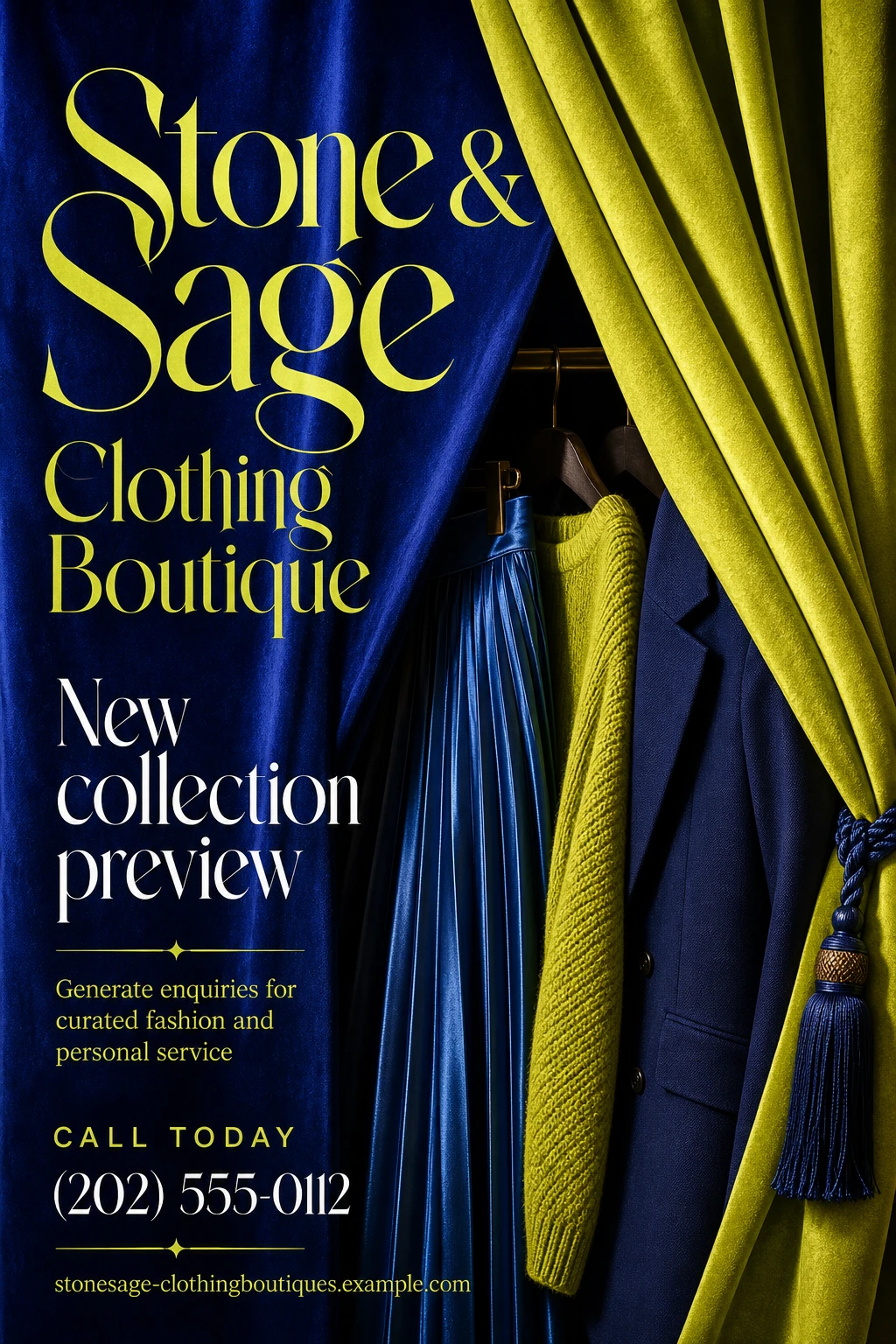
The Fitting-Room Curtain Opens on What’s New
An arrival-focused new-collection preview makes the boutique’s most immediate commercial moment feel theatrical and tactile: shoppers are invited into a compelling edit rather than shown a generic rack. The poster is built to convert curiosity into a direct styling appointment or collection-preview enquiry.
Prompt
Create a simple poster for a local clothing boutique, featuring new collection preview. Use blue and yellow in a clear, easy-to-edit layout that makes the finished result the main visual. Add a short headline, business name, contact details, and one clear printed call to action.
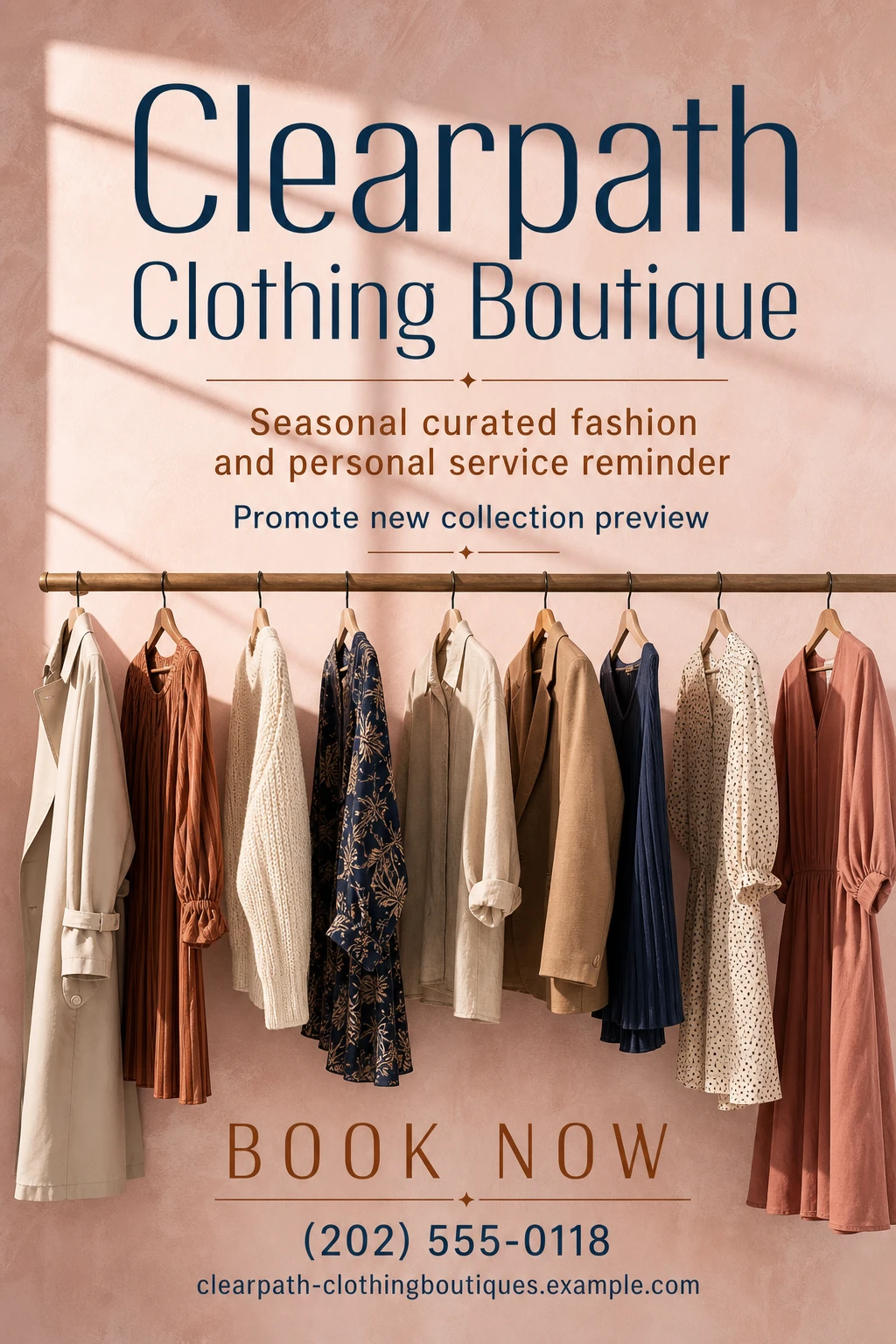
A Rail of Good Decisions, Seen in Morning Light
This brand-and-trust-led direction demonstrates the boutique’s curatorial judgement with calm, tangible evidence: a small, beautifully organised rail of real clothing in a recognisable local setting. It supports return visits and referrals by communicating that every piece has been selected with care.
Prompt
Create a simple poster for a local clothing boutique, featuring seasonal curated fashion and personal service reminder. Use beige and navy blue in a clear, easy-to-edit layout that makes the finished result the main visual. Add a short headline, business name, contact details, and one clear printed call to action.
Interactive prompt builder
Build your own starting brief
Change the campaign details, copy the result, or send it directly to AI Marketing Designer.
Generated brief
Create a polished poster for a local clothing boutique. Campaign goal: generate enquiries for curated fashion and personal service. Audience: style-conscious local shoppers. Offer: new collection preview. Visual direction: editorial fashion image, elegant neutral palette, and bold whitespace. Include a strong headline, real product photography and store information and real contact and service-area details, and one clear call to action. Format: A3 portrait. Keep all text readable and leave room for real business details.
Copy ideas
Headlines and calls to action
A better way to enquiries for curated fashion and personal service
New collection preview — made simple
Local clothing boutique, clear next step
Seasonal curated fashion and personal service reminder for new local customers comparing curated fashion and personal service
Quality checklist
Mistakes to avoid
- !Using generic imagery or vague claims instead of showing real product photography and store information and one focused offer.
- !Trying to speak to every possible audience instead of prioritising style-conscious local shoppers.
- !Using decorative elements that compete with real product photography and store information and the main call to action.
- !Publishing placeholder contact information or an offer without clear terms.